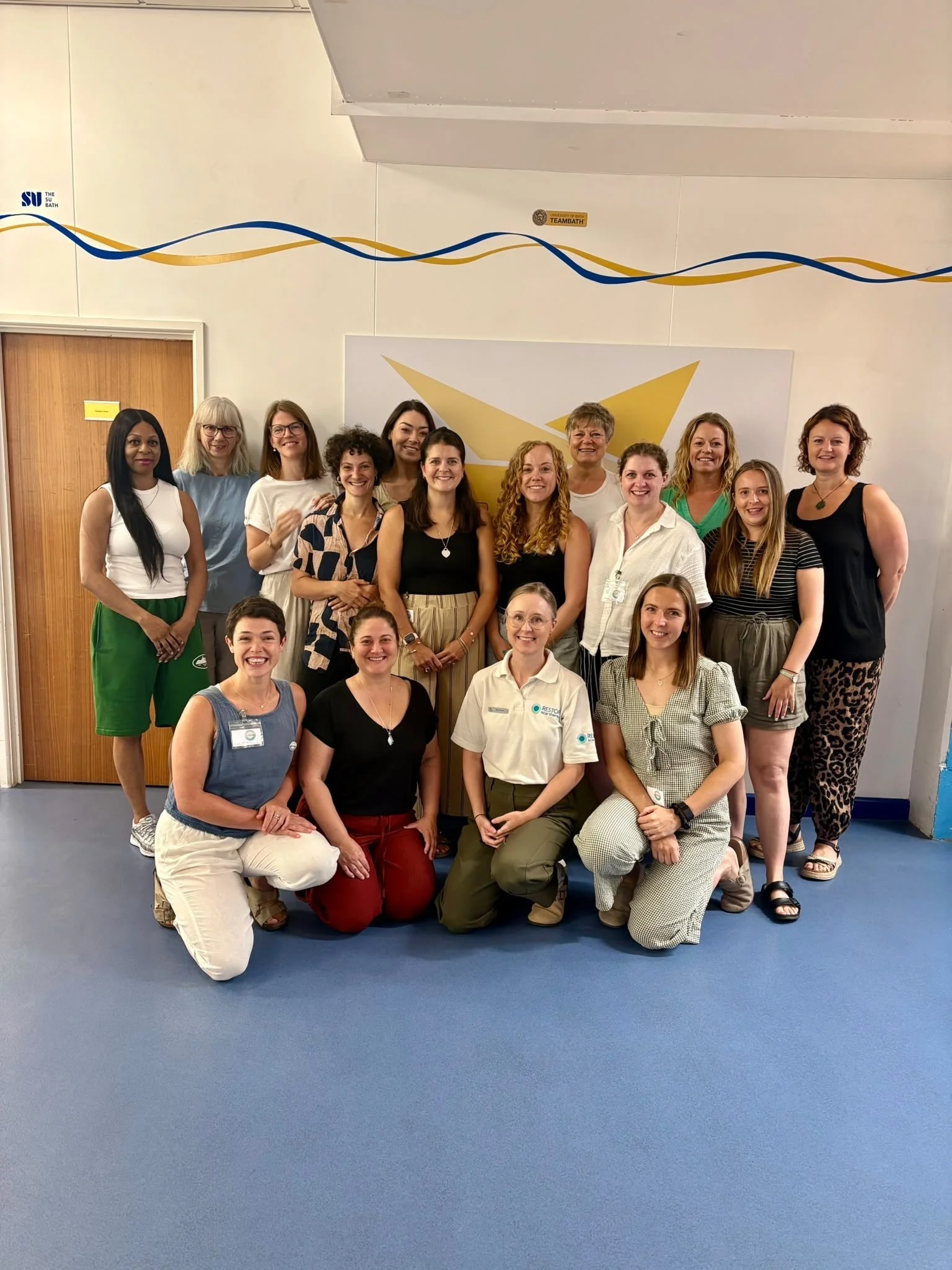
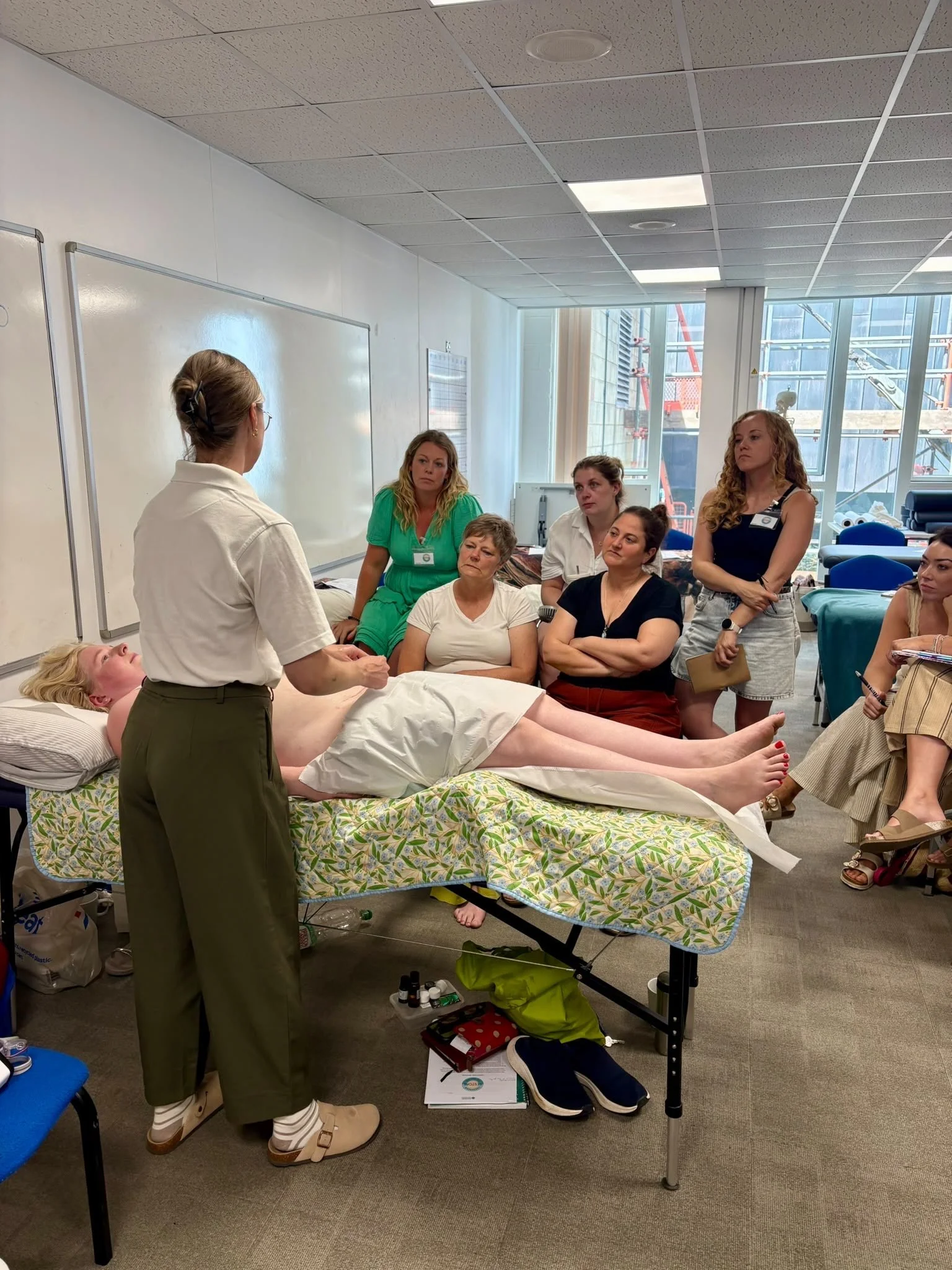
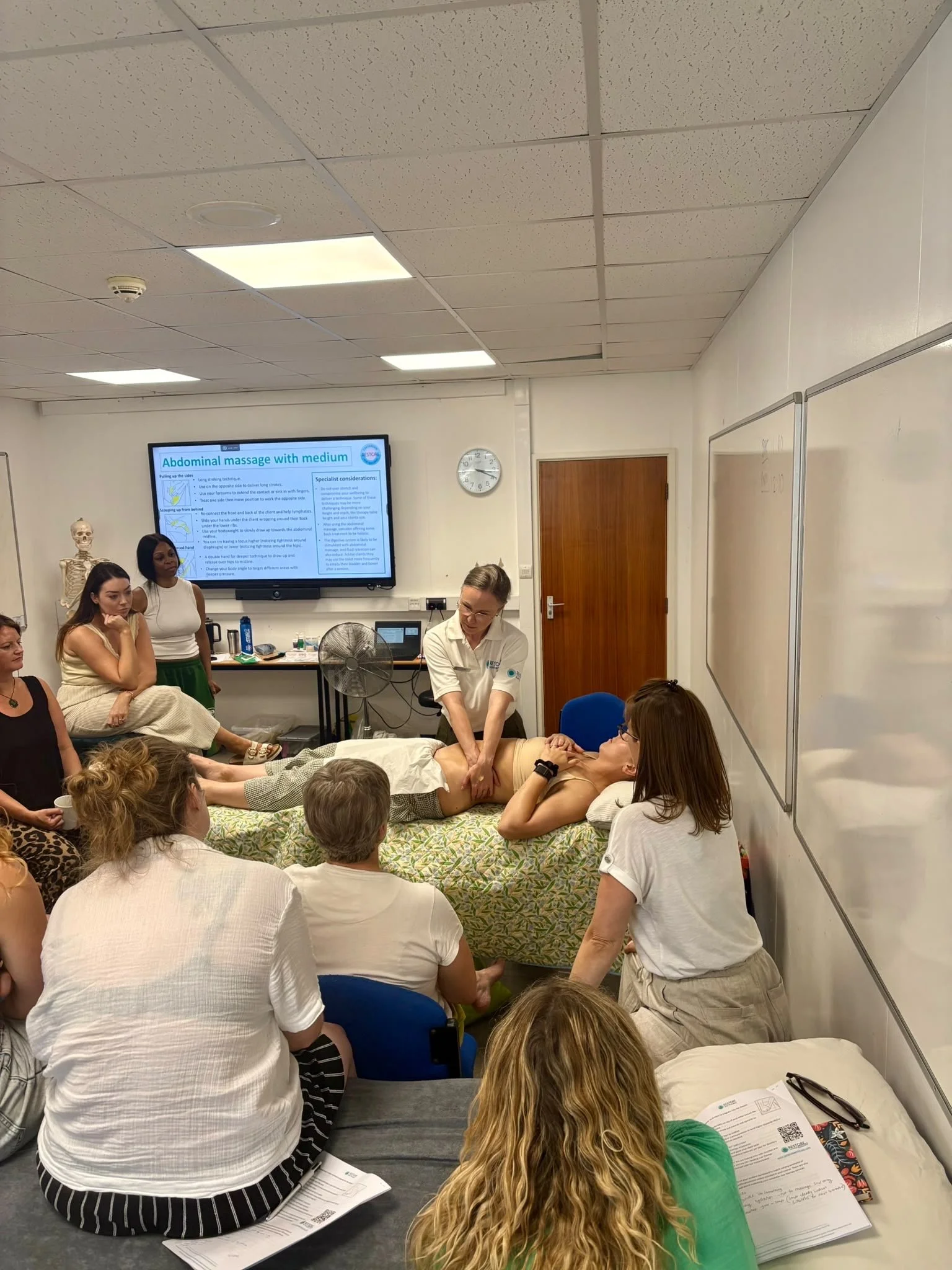
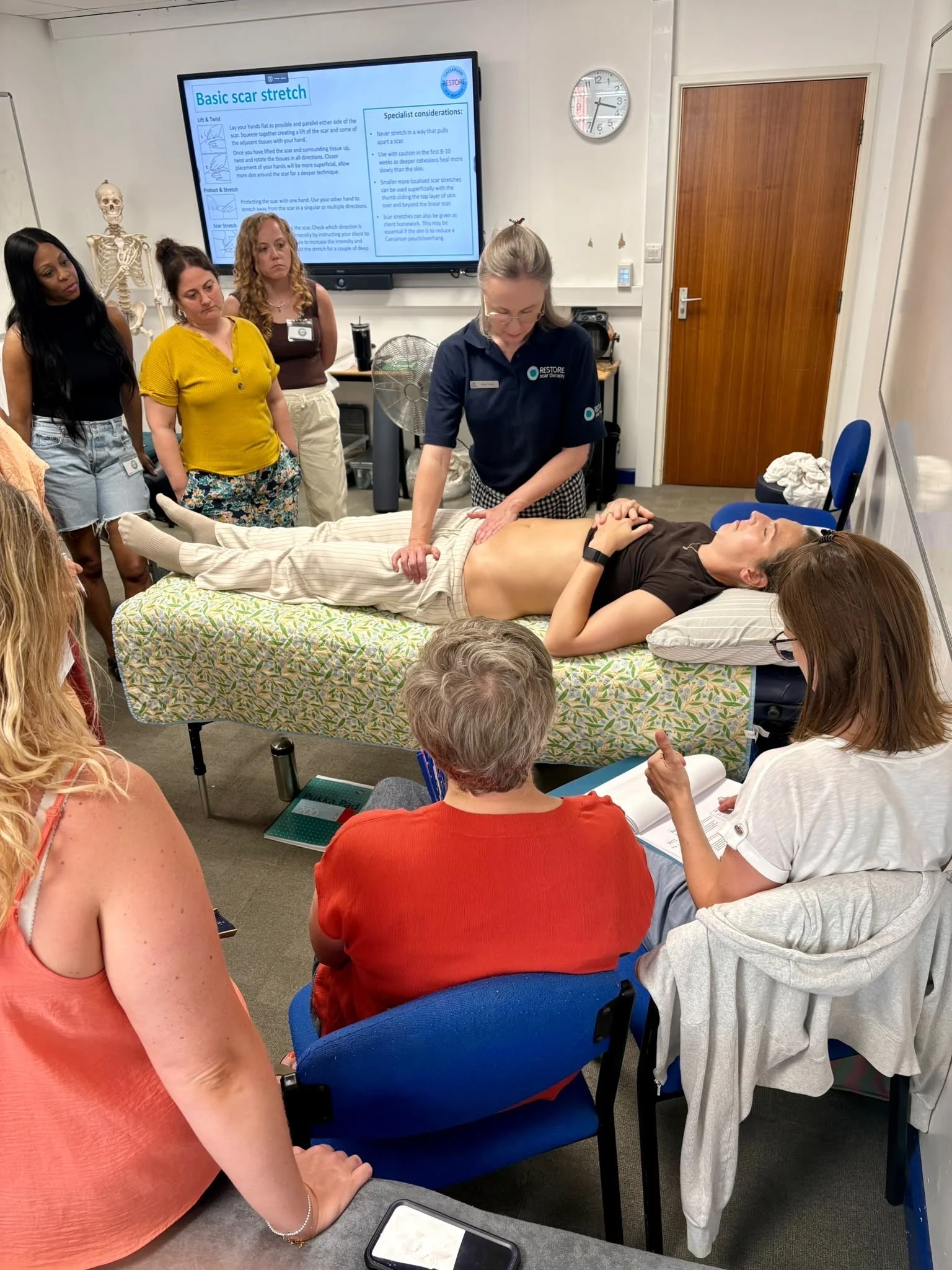
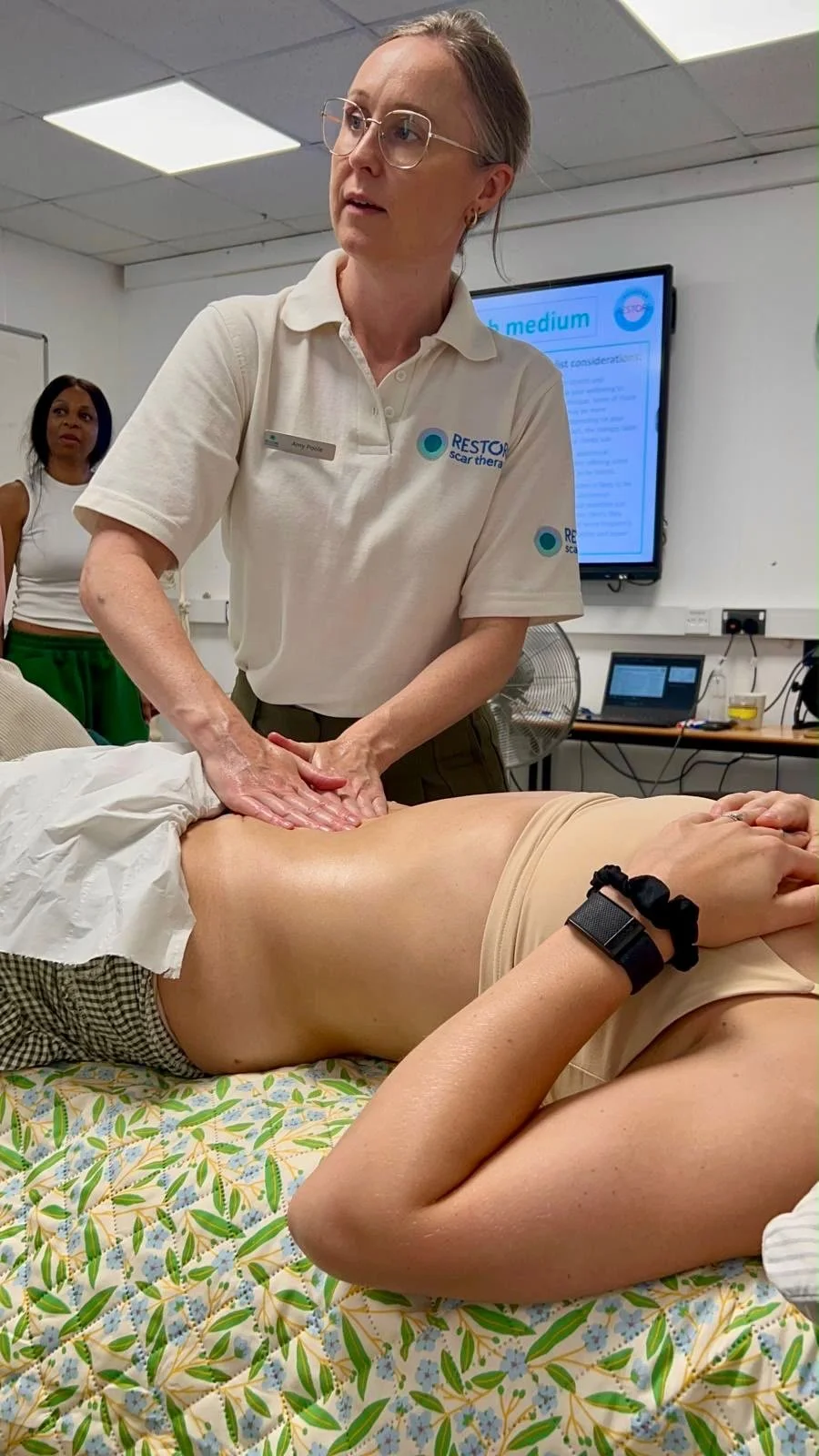
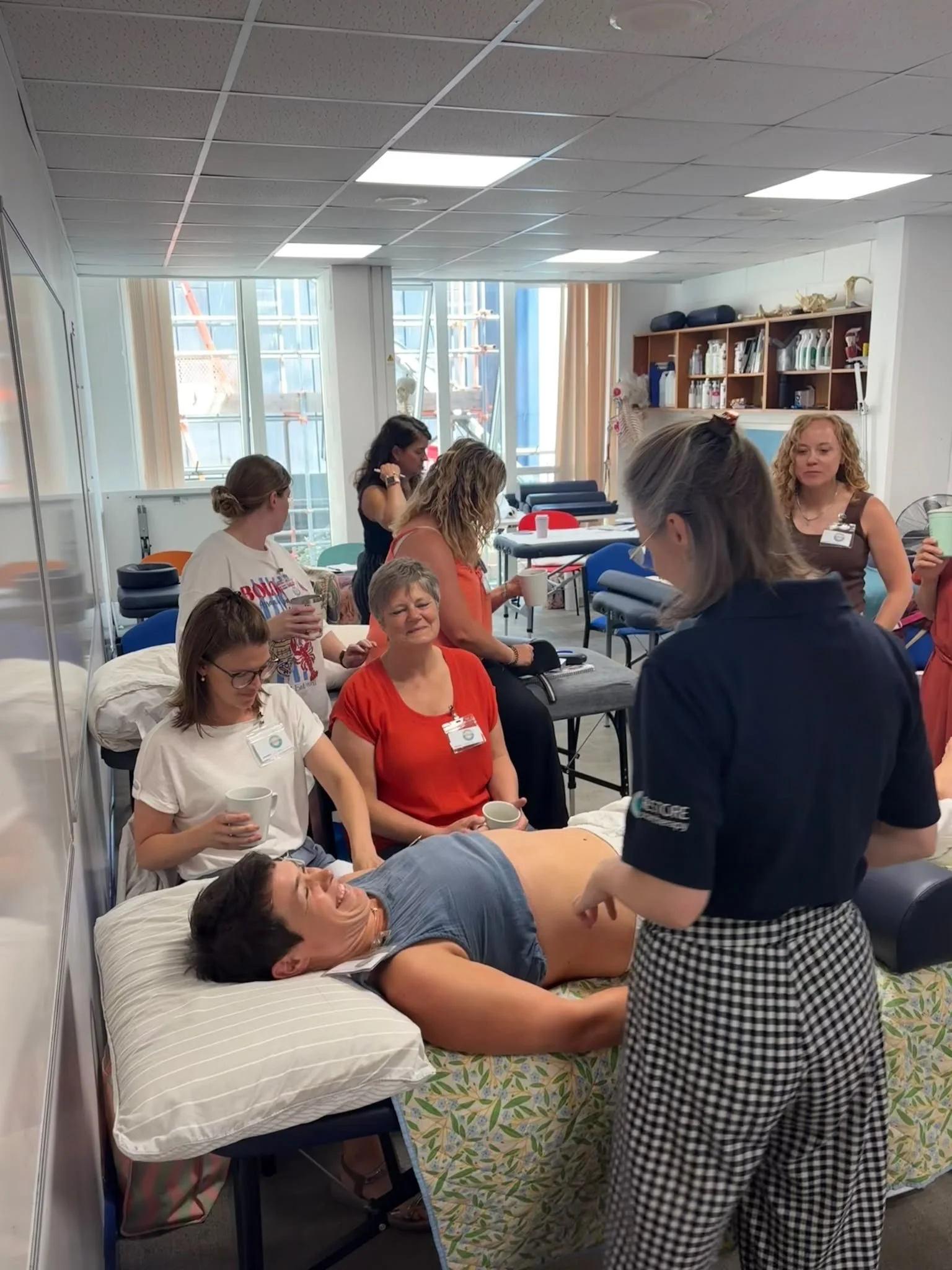
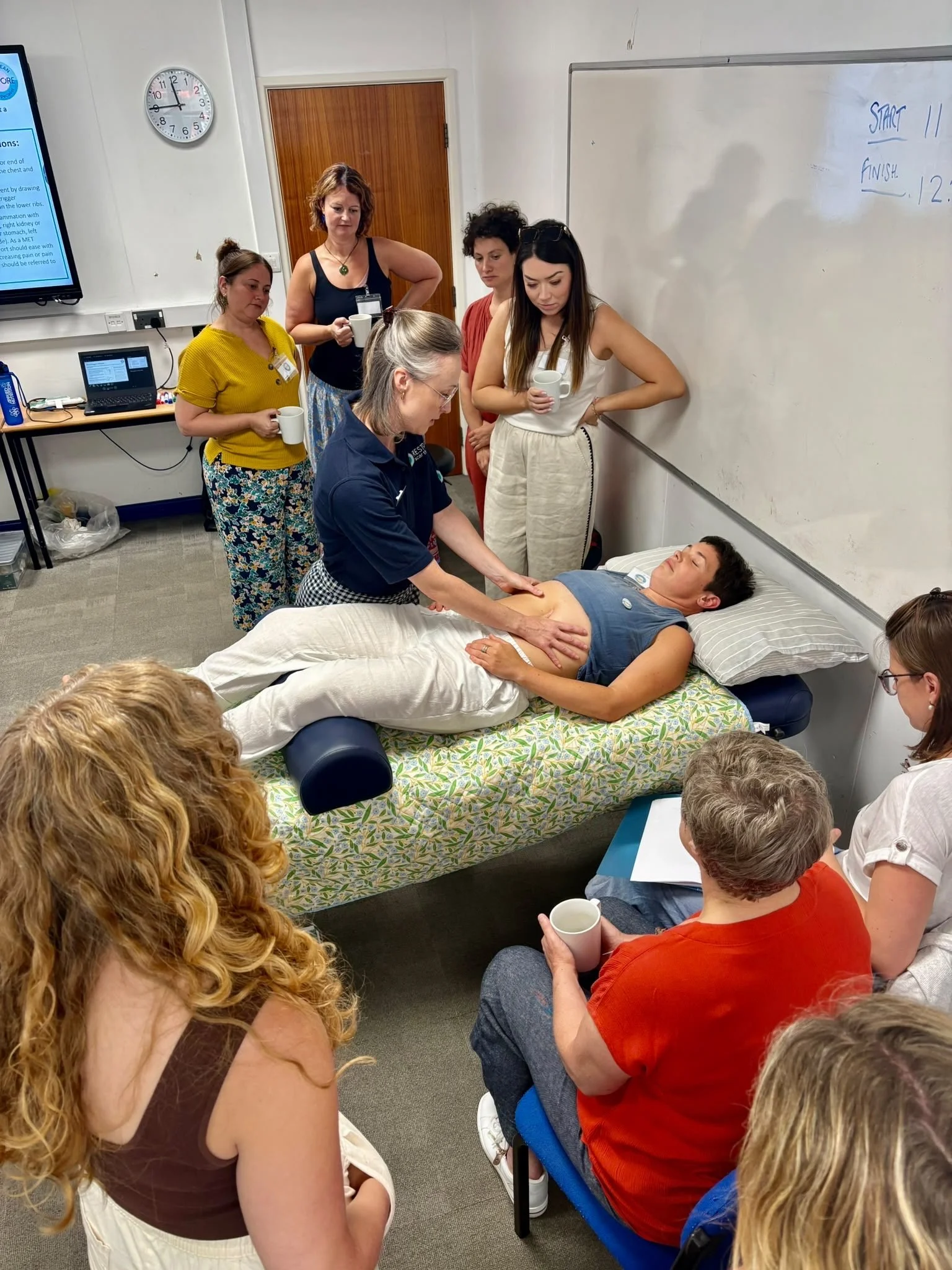
Last week I was in Bath supporting tutor Amy Poole (@thenatalbody) from Restore Scar Therapy delivering a C-Section Scar Recovery course. I took this course last year in London finding myself faced with multiple caesarean scars whilst giving Chi neitsang, abdominal massage. Caesarean births, which from hereon in I will call c-sections, account for around 45% of all births in England according to the NHS and for most women they undergo this procedure and they’re sent off home with little knowledge of long-term scar care. Most women I have met really did not want to look at or touch their scar. It was better ‘out of sight, out of mind’ attitude and with a newborn baby to attend to they had or have little time to think about their own recovery. Sometimes this works and for some women they are lucky and make a full recovery, no complications.
For other women the wound may heal over and become a neat scar but there is an ongoing feeling of tension, tightness, numbness, sensitivity, changes in digestion or urination and a real sense that their body has not quite returned to how it felt before their cesarean birth. Connecting with the scar site in itself can be emotionally challenging and maybe there has been no time or space to consider what their body has experienced.
Some scars expand beyond the parameters of the incision site so, they look less like a hairline and more pronounced. Usually there has been tension on the scar causing the skin to produce more Type 3 collagen. Or the client has a genetic predisposition to laying down more collagen, they are prone to what is known as keloid scaring. Early intervention for these scars would involve products. Silicone sheets for example can be highly beneficial in these instances.
As scar therapist we are trained to assess and measure the movement or lack of movement around the scar site. We can teach you to reconnect with your breath which is a very acessable and simple tool to help your recovery. We use our hand skills and knowledge to build up a picture of what is happening beneath the scar site and once we have established a pattern of movement, alongside a pattern of sensation or lack thereof, we can employ a variety of techniques to soften the scar tissue and ease the tension on the scar. We can offer our clients homework and advise on the best products to support their healing journey and the results can be astounding. For example, one of my clients pre-baby was a keen runner. Post c-section my client was unable to get back to running because whenever she ran she felt an uncomfortable pressure around the site of her scar. She was concerned that she was causing herself damage and the sensation of running felt very uncomfortable. I am delighted to say this client got back to her running, completed a half marathon and is now pregnant with her second child. The skills from the course enable me to mobilise the scar tissue over a course of sessions and alleviate the issue.
Scar therapy is best thought about as early as possible however, there is no time limit for the treatments being effective. There are factors to consider when devising a treatment plan; young scars need to be treated for short periods of time on a weekly or biweekly basis, older scars can take longer treatment times and also require extra time between sessions to re-balance the body. If an old scar is loosened up it can impact the whole body’s function, how we breath, move, run, hold ourselves up.
Treatment planning is essential for scar therapy. A one off session for a mature scar can be useful but for results a course of treatment is highly recommended and if you are able to do homecare this will likely speed up the recovery process. Each scar journey is unique but, what is universal is that no work can begin until the wound is a scar – that is when the skin is completely sealed and there are no scabs.
Emma Holly, the founder of Restore Scar Therapy is passionate about scar tissue. I first met Emma in 2019 on a day workshop in at Cheltenham School of Complimentary Therapy & Beauty where she delivered an introductory course on scar therapy for practitioners. I was drawn to that course because of my own journey with scar tissue and I was curious how massage could be used to support my own healing. The results from the techniques were remarkable and I knew that I needed to learn more about C-Sections specifically. I am so grateful for the training and it was a pleasure and a privilege to help out in the classroom. As most of you know I love watching and helping students learning and building confidence in new skills.
The women I have met on this course came from all over the UK and Europe and brought so much warmth to the room. As was the case when I attended as a student last year we had midwives in attendance, we had holistic massage therapists, osteopaths, physios, beauticians, lymphatic drainage therapist and fertility massage therapists. The participants were so quick to pick up the skills, so curious about the course and knew many women, some of whom were themselves, who needed this kind of support with their scar healing and previously had not known what to do. I wish all the students good luck with their coursework and I am delighted that there is another wave of talented therapists heading out into the professional sphere of scar therapy to add to their tool kit.
For anyone who is curious about scar therapy do please get in touch or check out my page on the website for more info:
Last week I was in Bath supporting tutor Amy Poole from Restore Scar Therapy delivering a C-Section Scar Recovery course. I took this course last year in London finding myself faced with multiple caesarean scars whilst giving Chi neitsang, abdominal massage. Caesarean births, which from hereon in I will call c-sections, account for around 45% of all births in England according to the NHS and for most women they undergo this procedure and they’re sent off home with little knowledge of long-term scar care. Most women I have met really did not want to look at or touch their scar. It was better ‘out of sight, out of mind’ attitude and with a newborn baby to attend to they had or have little time to think about their own recovery. Sometimes this works and for some women they are lucky and make a full recovery, no complications.
For other women the wound may heal over and become a neat scar but there is an ongoing feeling of tension, tightness, numbness, sensitivity, changes in digestion or urination and a real sense that their body has not quite returned to how it felt before their caesarean birth.
Some scars expand beyond the parameters of the incision site so, they look less like a hairline and more pronounced. Usually there has been tension on the scar causing the skin to produce more Type 3 collagen. Or the client has a genetic predisposition to laying down more collagen, they are prone to what is known as keloid scaring. Early intervention for these scars would involve products. Silicone sheets for example can be highly beneficial in these instances.
As scar therapist we are trained to assess and measure the movement or lack of movement around the scar site. We use our hand skills and knowledge to build up a picture of what is happening beneath the scar site and once we have established a pattern of movement, alongside a pattern of sensation or lack thereof, we can employ a variety of techniques to soften the scar tissue and ease the tension on the scar. We can offer our clients homework and advise on the best products to support their healing journey and the results can be astounding. For example, one of my clients pre-baby was a keen runner. Post c-section my client was unable to get back to running because whenever she ran she felt an uncomfortable pressure around the site of her scar. She was concerned that she was causing herself damage and the sensation of running felt very uncomfortable. I am delighted to say this client got back to her running, completed a half marathon and is now pregnant with her second child. The skills from the course enable me to mobilise the scar tissue over a course of sessions and alleviate the issue.
Scar therapy is best though about as early as possible however, there is no time limit for the treatments being effective. There are factors to consider when devising a treatment plan however. Young scars need to be treated for short periods of time on a weekly or biweekly basis, older scars can take longer treatment times and also require extra time between sessions to rebalance the body. If an old scar is loosened up it can impact the whole body’s function, how we breath, move, run, hold ourselves up.
Treatment planning is essential for scar therapy. A one off session for a mature scar can be useful but for results a course of treatment is highly recommended and if you are able to do homecare this will likely speed up the recovery process. Each scar journey is unique but, what is universal is that no work can begin until the wound is a scar – that is when the skin is completely sealed and there are no scabs.
Emma Holly, the founder of Restore Scar Therapy is passionate about scar tissue. I first met Emma in 2019 on a day workshop in at Cheltenham School of Complimentary Therapies where she delivered an introductory course on scar therapy for practitioners. I was drawn to that course because of my own journey with scar tissue and I was curious how massage could be used to support my own healing. The results from the techniques were remarkable and I knew that I needed to learn more about C-Sections specifically. I am so grateful for the training and it was a pleasure and a privilege to help out in the classroom. As most of you know I just love watching students learning and building confidence in future therapists new skills.
For anyone who is curious about scar therapy do please get in touch.
Last week I was in Bath supporting tutor Amy Poole from Restore Scar Therapy delivering a C-Section Scar Recovery course. I took this course last year in London finding myself faced with multiple caesarean scars whilst giving Chi neitsang, abdominal massage. Caesarean births, which from hereon in I will call c-sections, account for around 45% of all births in England according to the NHS and for most women they undergo this procedure and they’re sent off home with little knowledge of long-term scar care. Most women I have met really did not want to look at or touch their scar. It was better ‘out of sight, out of mind’ attitude and with a newborn baby to attend to they had or have little time to think about their own recovery. Sometimes this works and for some women they are lucky and make a full recovery, no complications.
For other women the wound may heal over and become a neat scar but there is an ongoing feeling of tension, tightness, numbness, sensitivity, changes in digestion or urination and a real sense that their body has not quite returned to how it felt before their caesarean birth.
Some scars expand beyond the parameters of the incision site so, they look less like a hairline and more pronounced. Usually there has been tension on the scar causing the skin to produce more Type 3 collagen. Or the client has a genetic predisposition to laying down more collagen, they are prone to what is known as keloid scaring. Early intervention for these scars would involve products. Silicone sheets for example can be highly beneficial in these instances.
As scar therapist we are trained to assess and measure the movement or lack of movement around the scar site. We use our hand skills and knowledge to build up a picture of what is happening beneath the scar site and once we have established a pattern of movement, alongside a pattern of sensation or lack thereof, we can employ a variety of techniques to soften the scar tissue and ease the tension on the scar. We can offer our clients homework and advise on the best products to support their healing journey and the results can be astounding. For example, one of my clients pre-baby was a keen runner. Post c-section my client was unable to get back to running because whenever she ran she felt an uncomfortable pressure around the site of her scar. She was concerned that she was causing herself damage and the sensation of running felt very uncomfortable. I am delighted to say this client got back to her running, completed a half marathon and is now pregnant with her second child. The skills from the course enable me to mobilise the scar tissue over a course of sessions and alleviate the issue.
Scar therapy is best though about as early as possible however, there is no time limit for the treatments being effective. There are factors to consider when devising a treatment plan however. Young scars need to be treated for short periods of time on a weekly or biweekly basis, older scars can take longer treatment times and also require extra time between sessions to rebalance the body. If an old scar is loosened up it can impact the whole body’s function, how we breath, move, run, hold ourselves up.
Treatment planning is essential for scar therapy. A one off session for a mature scar can be useful but for results a course of treatment is highly recommended and if you are able to do homecare this will likely speed up the recovery process. Each scar journey is unique but, what is universal is that no work can begin until the wound is a scar – that is when the skin is completely sealed and there are no scabs.
Emma Holly, the founder of Restore Scar Therapy is passionate about scar tissue. I first met Emma in 2019 on a day workshop in at Cheltenham School of Complimentary Therapies where she delivered an introductory course on scar therapy for practitioners. I was drawn to that course because of my own journey with scar tissue and I was curious how massage could be used to support my own healing. The results from the techniques were remarkable and I knew that I needed to learn more about C-Sections specifically. I am so grateful for the training and it was a pleasure and a privilege to help out in the classroom. As most of you know I just love watching students learning and building confidence in future therapists new skills.
For anyone who is curious about scar therapy do please get in touch or check out my page on here for C-Section Scar Treatment.